
Frequency Is Not a Trophy
Reclaiming Energy, Frequency, and Vibration from Spiritual Superiority

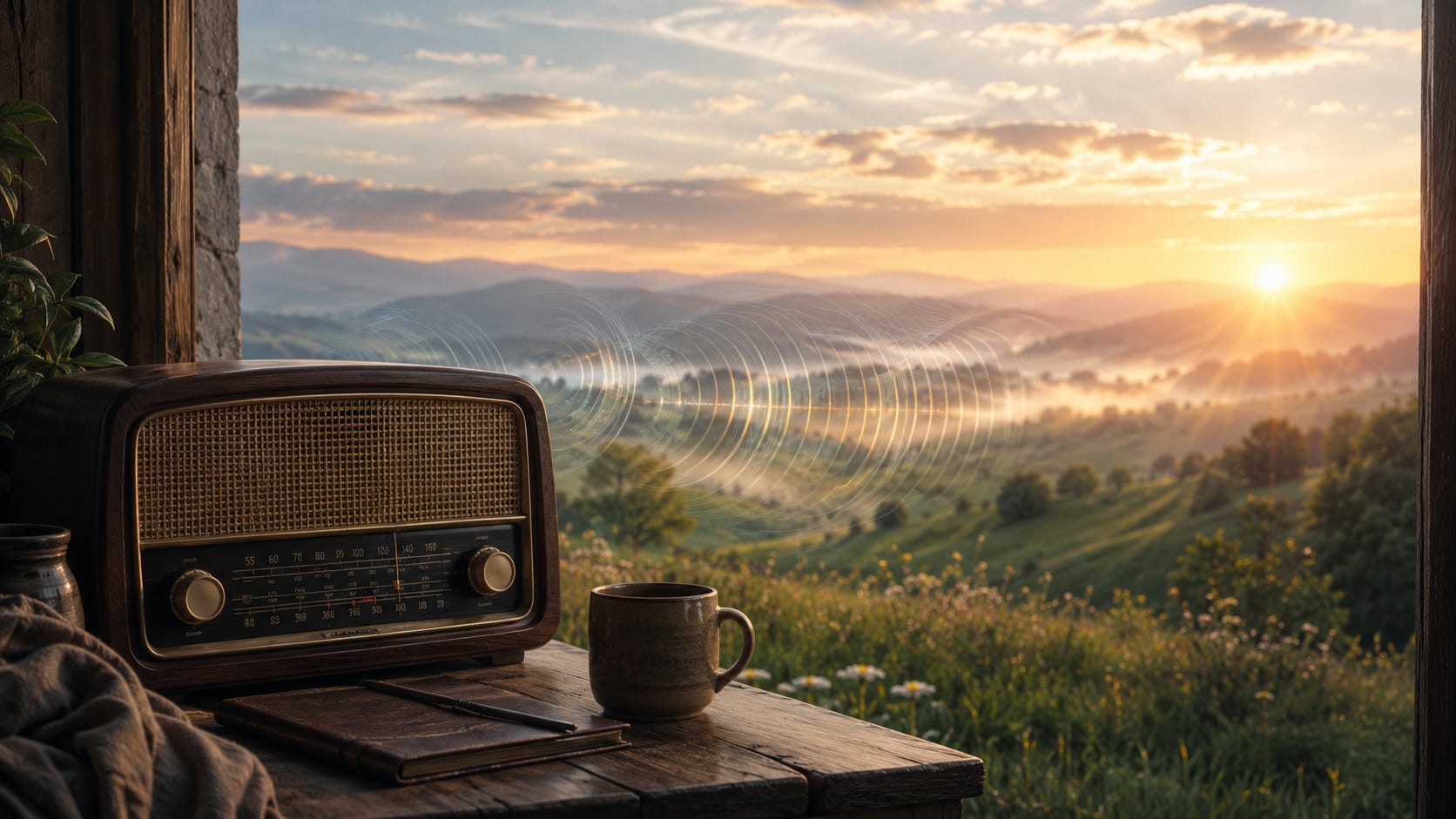
There is a line often attributed to Nikola Tesla that has been passed around the spiritual community so many times it has become almost threadbare:
If you want to find the secrets of the universe, think in terms of energy, frequency, and vibration.
I understand why the sentence endures.
It has music in it. It carries the shimmer of science and mysticism shaking hands. It gives language to what many of us have sensed intuitively: that reality is not as solid as it appears, that matter is not dead, that the universe is not a warehouse of objects but a living field of motion, relationship, resonance, and exchange.
And yet, somewhere along the way, this beautiful triad — energy, frequency, vibration — was quietly hijacked.
It was lifted out of mystery and placed into hierarchy.
It became a ranking system.
Even worse, a spiritual caste system.
A way for some people to imagine themselves “higher frequency” than others, as if the soul were a radio tower competing for altitude; as if grief, anger, illness, doubt, trauma, skepticism, or sorrow were signs of lesser development.
This is not only unkind. It is also false.
Frequency is not a trophy.
Frequency is a tuning.
Your “frequency” is not proof that you are better, higher, purer, or more spiritually advanced than someone else.
It simply means: what are you tuned into right now?
Like a radio.
A radio can tune to many stations. One station may be broadcasting music. Another may be broadcasting news. Another may be full of static. And there are seasons in life when we are, quite understandably, full of static. I was certainly full of static when Scott was killed.
But the radio itself is not morally superior because it is tuned to classical music instead of weather reports. It is simply receiving different information.
So in plain terms:
When you are tuned to fear, you may interpret everything as danger.
When you are tuned to love, you may notice connection, kindness, and possibility.
When you are tuned to grief, you may receive the world through longing.
When you are tuned to wonder, you may perceive mystery where someone else sees only ordinary events.
When you are tuned to certainty, you may reject anything that does not fit what you already believe.
When you are tuned to humility, you may be able to say, “There may be more here than I understand.”
So when I say frequency is a tuning, I simply mean that our inner state affects what we notice, what we receive, how we interpret things, and what kind of meaning we are able to make.
It does not mean: I am high frequency and you are low frequency.
It means: Right now, I am tuned toward fear, love, grief, wonder, anger, reverence, curiosity, control, openness, or protection.
And tuning can change. That is the mercy of it.
A grieving person is not “low frequency.” They may be tuned to love through the ache of absence.
An angry person is not automatically “low frequency.” They may be tuned to injustice and the need for truth.
A skeptical person is not spiritually inferior. They may be tuned to discernment.
A joyful person is not automatically more evolved. They may simply be tuned to gratitude in that moment.
So the better question is not: Is my frequency higher than yours?
The better question is: What am I tuned to right now, and is that tuning helping me become more loving, truthful, clear, and available?
The word frequency comes from the Latin frequentia, meaning a crowding, multitude, or assembling in great numbers. Its root is frequens — crowded, repeated, numerous. Before frequency became a scientific measurement of cycles per second, it carried the sense of recurrence, gathering, repetition, and presence.
In simple terms: how often something happens. Nothing more.
How fascinating.
Frequency was not originally a ladder. It was a gathering. A coming together. A repetition. A return. This alone changes everything.
What if frequency is not primarily about being spiritually “above” someone else?
What if frequency is about what gathers in us, what repeats through us, what we return to, what we assemble around, what we make ourselves available to?
A person may be grieving and still be exquisitely tuned to love.
A person may be angry and still be tuned to justice.
A person may be skeptical and still be tuned to truth.
A person may be exhausted and still be tuned to devotion.
A person may be sitting in a dark night of the soul and still be tuned to God.
So let us be careful before we call someone “low frequency” simply because their field does not look cheerful, polished, marketable, or convenient.
Sometimes what we call “low vibration” is simply unprocessed pain asking not to be shamed, but heard.
Sometimes what we call “negative energy” is a soul telling the truth about their pain before it has found the language of peace.
Sometimes what we call “dense” is the very place where incarnation is doing its deepest work.
I know something about this.
In high school, I was not popular. I was not exactly an outcast, but it was not always fun to be me. My home life was just this side of a nightmare: a verbally abusive, philandering father; an alcoholic mother doing her best to survive in a time when a woman could not even get a credit card without her husband’s signature; siblings trying to escape in the ways wounded people often do.
From the curb, it may have looked like a polished, upper-middle-class life.
Inside, it was chaos.
At school, I was not really seen. Or if I was seen, it was often as someone to whisper about, quietly mock, or misunderstand. I carried pain I did not have language for. I could not see my future from where I stood. All I could do was survive, keep showing up, and get through the day.
Had today’s spiritual vocabulary been popular then, someone might have called me “low frequency.”
But they would have been wrong. I was not low frequency. I was hurting.I was surviving. I was trying to stay intact in a world that did not yet know how to read me.
And this is why I am so cautious about spiritual labels that pretend to know the whole house after glancing at it from the curb.
Part of the problem is that many of us are still trying to understand frequency through a Newtonian-binary lens.
High or low.
Good or bad.
Light or dark.
Advanced or unevolved.
Awake or asleep.
But human beings are not that simple. And the universe does not appear to be so obediently binary. There is always deeper geometry to every situation than we glean at first glance.
The mystic knows this.
The quantum physicist knows this.
The poet knows this.
The grieving mother knows this.
The person who has received a sign from someone beyond the veil knows this.
Reality does not always arrive as a yes or no.
Sometimes it arrives as a maybe.
Sometimes as a shimmer.
Sometimes as an interference pattern.
Sometimes as a question that has not yet ripened into an answer.
Sometimes as a what if? that loosens the collar of certainty just enough for the soul to breathe.
But we are often very quick to judge from the curb outside someone else’s house.
Even so-called spiritual people can be quick to cast the first stone without nearly enough information.
We look at someone’s grief, anger, exhaustion, pain, illness, skepticism, or sorrow and make a binary decision about a far-from-binary life.
But people are not frequency reports.
They are living mysteries.
They are histories.
They are nervous systems.
They are ancestral stories.
They are heartbreaks and hopes and hidden wounds.
They are unfinished poems in motion.
John Archibald Wheeler, one of the great physicists willing to think near the edge of the map, asked questions that were not merely scientific but almost mystical in their humility:
Why does time seem to move like a one-way street?
Why do we remember the past but not the future?
Why does time have an arrow?
These are not small questions. They remind us that what we call “obvious” may only be what our nervous system has learned to process.
Lewis Carroll, with his usual sideways brilliance, gave us the White Queen’s delicious rebuke:
“It’s a poor sort of memory that only works backwards.”
And my friend Paul Levy, author of The Quantum Revelation, offers a sentence I return to often:
We should be very careful what we assign to the trash bin of the impossible.
Exactly.
And I would add: we should be very careful what we assign to the trash bin of the inferior. Read that again.
The impossible.
The unworthy.
The unevolved.
The “low frequency.”
How many living mysteries have we dismissed because we interpreted them too quickly?
How many wounded people have been spiritually mislabeled because their pain did not look like peace? Didn’t have spiritual ‘curb appeal'.’
How many profound transmissions have we missed because they arrived wearing the inconvenient clothing of grief, doubt, anger, or rupture?
The spiritually arrogant person says, “I already know what this is.”
The mystic says, “What else might be true?”
So here is my invitation:
Let us stop using frequency as a weapon.
Let us stop turning vibration into a badge.
Let us stop pretending that spiritual maturity is measured by how shiny, serene, positive, or “high vibe” a person appears.
A person who can sit beside suffering without fleeing may be beautifully tuned.
A person who can tell the truth without cruelty may be beautifully tuned, regardless of what their house or their hair looks like at a given moment.
A person who can say, “I do not know,” without collapsing may be beautifully tuned.
A person who can remain curious in the presence of contradiction may be beautifully tuned.
A person who can hold grief and gratitude in the same trembling hand may be beautifully tuned.
Frequency is not superiority.
Frequency is orientation.
Frequency asks:
What are you turned toward?
What do you return to?
What gathers in your field?
What information can you receive without distorting it through fear, pride, certainty, or contempt?
What music are you willing to hear?
Perhaps this is why Oriah Mountain Dreamer’s The Invitation still feels so alive to me even thirty-years after first reading it.
Her poem is not interested in our spiritual résumé.
It is not interested in whether we have polished ourselves into some impressive, marketable, high-frequency version of enlightenment.
It asks better questions.
Can we sit with pain?
Can we be with joy?
Can we stand in the center of the fire and not shrink back?
Can we be sustained from within when everything else falls away?
That, to me, is the truer measure of tuning.
Not superiority.
Not spiritual performance.
Not “my frequency is higher than your frequency.”
But presence.
Honesty.
Compassion.
Capacity.
The willingness to stay open in the actual weather of being human.
You can read Oriah Mountain Dreamer’s full poem, The Invitation, on her website: oriahmountaindreamer.com
This is where I believe we need a new word — or perhaps an old truth wearing new clothes.
Not merely vibration.
VIBRATIONSHIP.
Vibration alone can become self-focused:
How high is my vibration?
How pure is my field?
How elevated am I?
But VIBRATIONSHIP restores relationship.
It says: I am not here to climb above you. I am here to enter conscious communion with life.
With Spirit.
With the Earth.
With grief.
With mystery.
With the living and the dead.
With the visible and the unseen.
With the information carried on frequencies I may not yet know how to interpret.
VIBRATIONSHIP is not about becoming spiritually superior.
It is about becoming more trustworthy within the signal.
That, to me, is the better teaching.
Not: Raise your vibration so you can escape the density of the world.
But: Refine your tuning so you can participate more lovingly, more truthfully, and more responsibly in the world.
Perhaps the secrets of the universe are not hidden because they are far away.
Perhaps they are hidden because we keep trying to rank what we were meant to revere.
Energy is not a possession.
Frequency is not a trophy.
Vibration is not a status symbol.
And spirituality is not a competition in which the most serene person wins.
All frequency carries information.
But we do not interpret that information as it is.
We interpret it as we are.
So the real work is not to declare ourselves “high frequency.”
The real work is to become more honest receivers. More humble interpreters. More loving, compassionate participants. More willing students of the field.
To ask not: Am I above this?
But: What is this teaching me?
Not: Am I higher than they are?
But: Can I meet this moment with more coherence, more compassion, more wonder, more truth?
That is the tuning.
That is the correction.
That is the refraction.
And perhaps, if we are very brave, it is also the secret Tesla’s famous phrase was always trying to whisper beneath the noise:
The universe is not asking us to become impressive.
It is asking us to become available.
Not higher. Truer.
Not shinier. Clearer.
Not above. Available.
And in that availability, the great symphony begins again.
Ever yours in wonder,
Cheryl A. Page
P.S.
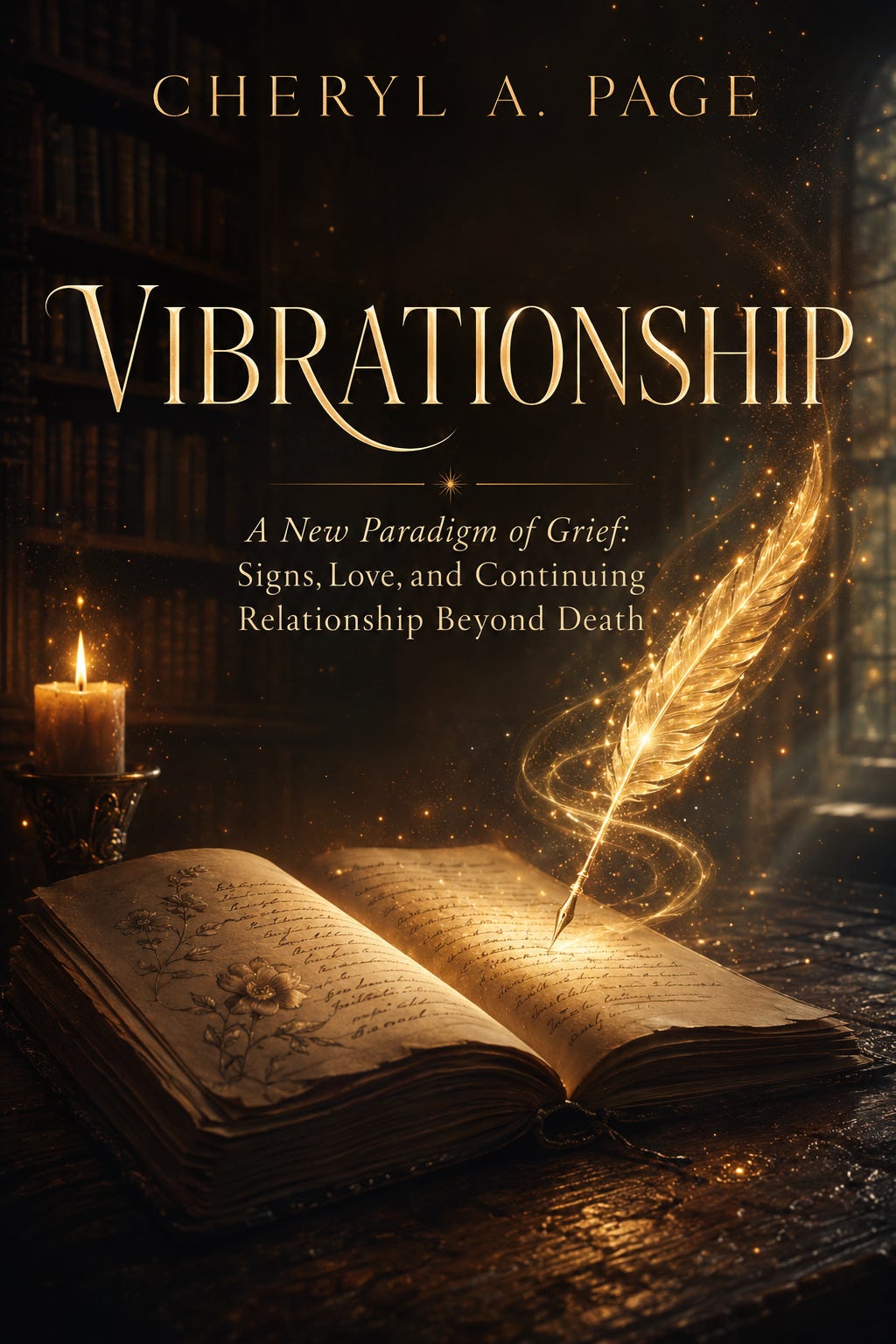
This essay also touches the living edge of a word and concept I have been developing for some time: VIBRATIONSHIP.
VIBRATIONSHIP is the shift from merely “raising one’s vibration” into cultivating conscious, loving, responsible relationship with the visible and unseen fields of life.
It is vibration in relationship.
It is resonance with responsibility.
It is the art of becoming trustworthy within the signal.
My forthcoming book, VIBRATIONSHIP: A New Paradigm of Grief — Signs, Love, and Continuing Relationship Beyond Death, will explore this more deeply, especially for those who are grieving and longing to understand signs, synchronicities, and continuing bonds with loved ones beyond the veil.
More soon.
Loved this post. Thank you!
Thank you for sharing your story Cheryl, you always amaze me with your strength and resilience and brilliance. this article is so informative and absolutely important in many many ways. We need to stop judging ourselves, and others around us. Love you, Marilyn